By Admin

The Executive’s Guide to Navigating a Business Trip in Singapore

Introduction
A business trip in Singapore can involve more than a single meeting in the Central Business District. For instance, a typical day could start with meetings in one of the many towering skyscrapers near Marina Bay, then end with networking over dinner in Orchard or Sentosa. The distances are manageable, but the pace can become demanding when appointments, airport transfers, client hospitality, and last-minute changes all compete for the same limited time.
Good preparation therefore extends beyond flights and accommodation. Payment methods, travel times, meeting locations, transport arrangements, and expense documentation can all affect how smoothly the visit runs. This guide explains what to prepare before a business trip in Singapore, how to move between commercial districts, and how the right vehicle can support a tightly planned itinerary.
Key Takeaways
• A seamless business trip in Singapore depends on realistic travel buffers, practical payment arrangements, and a clear understanding of where meetings are located.
• Public transport and ride-hailing suit many journeys, while a dedicated vehicle can be useful for multi-stop schedules, client hosting, equipment, or travel outside the central districts.
• The most suitable rental depends on passenger numbers, luggage, daily mileage, parking conditions, and the level of support required during the visit.
What to Know Before Your Business Trip to Singapore
A little preparation can remove avoidable friction once the working day begins. The following points are especially relevant to visiting executives who need to manage costs, punctuality, and several locations within a short stay.
Currency, Payments, and Everyday Business Expenses
Singapore uses the Singapore dollar, and card payments are widely accepted across hotels, offices, restaurants, shopping centres, taxis, and many smaller merchants. Even so, keeping a modest amount of cash can be useful for stalls or smaller businesses that do not accept your preferred payment method.
Using Contactless Payments During Your Stay
Contactless cards and mobile wallets can cover much of a business trip in Singapore. Before travelling, confirm that your cards are enabled for overseas use and check the foreign transaction fees charged by your bank. It is also sensible to carry a second card issued on a different network in case one is declined or temporarily blocked.
Public transport is similarly straightforward. Foreign-issued American Express, Mastercard, and Visa contactless cards can be used on trains and public buses, although administrative or bank charges may apply. Tap in and out with the same card or mobile wallet so the fare is calculated correctly.
Keeping Corporate Expenses Organised
Work trips often create a steady stream of small transactions, including meals, parking, ERP charges, fuel, charging, and transport fares. Using a dedicated company card can make reconciliation easier and reduce the need to separate personal purchases later.
Save digital receipts as they are issued rather than waiting until the end of the trip. Rental invoices, hotel folios, restaurant receipts, and app-based transport records can then be matched against the itinerary while the details remain fresh. Company policies differ, so check in advance which expenses require itemised receipts or prior approval.
Understanding Service Charges, GST, and Tipping
Many restaurants and hotels add a service charge, commonly 10%, before applying 9% GST to the total. This is often shown as “++” beside menu prices. Tipping is generally not expected, although a visitor may still choose to recognise particularly helpful service.
For a business trip in Singapore that includes client meals, confirm whether your internal entertainment policy covers service charges, alcohol, and guest expenses. Recording the names of attendees and the business purpose shortly after the meal can also simplify expense reporting.
Planning for Parking and ERP
Driving costs are not limited to the rental rate. Central office towers, hotels, and shopping centres usually charge for parking, and prices can vary by location and time. Some buildings also have separate visitor parking entrances or registration procedures.
Singapore’s Electronic Road Pricing system charges motorists who pass through operating gantries during selected periods. Rates are reviewed regularly and vary by time and vehicle type. Ask the rental provider how ERP payments are handled and whether a stored-value card or another payment arrangement is provided.
Scheduling and Navigation Logistics
Business trip planning in Singapore should begin with a map of every appointment, hotel, dinner venue, and airport transfer. A compact map can create a false sense that every journey will be quick. Travel times change with commuter peaks, weather conditions, road incidents, large events, and congestion near major business districts.
Understand Where Your Meetings Are Located
The CBD, including Raffles Place, Shenton Way, Marina Bay, and Tanjong Pagar, contains a high concentration of banks, professional services firms, and regional offices. Meetings within this area may be close enough to combine on foot, particularly where buildings are connected by sheltered or underground walkways.
Other commercial centres are spread across the island. One-north and Science Park host technology, research, and biomedical organisations. Changi Business Park serves many finance, technology, and logistics operations, while Jurong and Tuas are important for industrial and supply-chain activity. Punggol Digital District is another developing business and technology hub.
Mapping every appointment before a business trip in Singapore helps reveal whether the schedule is genuinely practical. Two meetings described as being “in Singapore” may still require a substantial cross-island journey.
Build Realistic Buffers Into the Calendar
Avoid scheduling meetings according to estimated driving time alone. Additional time should be given for leaving the building, finding your vehicle, exiting the car park, navigating traffic, security registration, and walking from the arrival point to the meeting room.
A 20-minute map estimate may require a much larger calendar block. For critical appointments, arrive early enough to account for reception procedures and unfamiliar building layouts.
Choosing Your Mode of Transport
Public transport is efficient for straightforward journeys near MRT stations. It can be especially practical when travelling alone between a hotel and one central office. Ride-hailing services are useful for door-to-door trips, although demand, pick-up restrictions, and waiting times can vary.
During a business trip in Singapore, a dedicated car becomes more relevant when the schedule includes several districts, client entertainment, bulky presentation materials, industrial sites, or frequent changes. The right transport for business travel depends on the day’s actual route rather than a single preferred mode. Many visitors combine both options, keeping the car for complex days and relying on trains or walking for compact city-centre schedules.
Elevating Your Executive Journey With the Right Transport
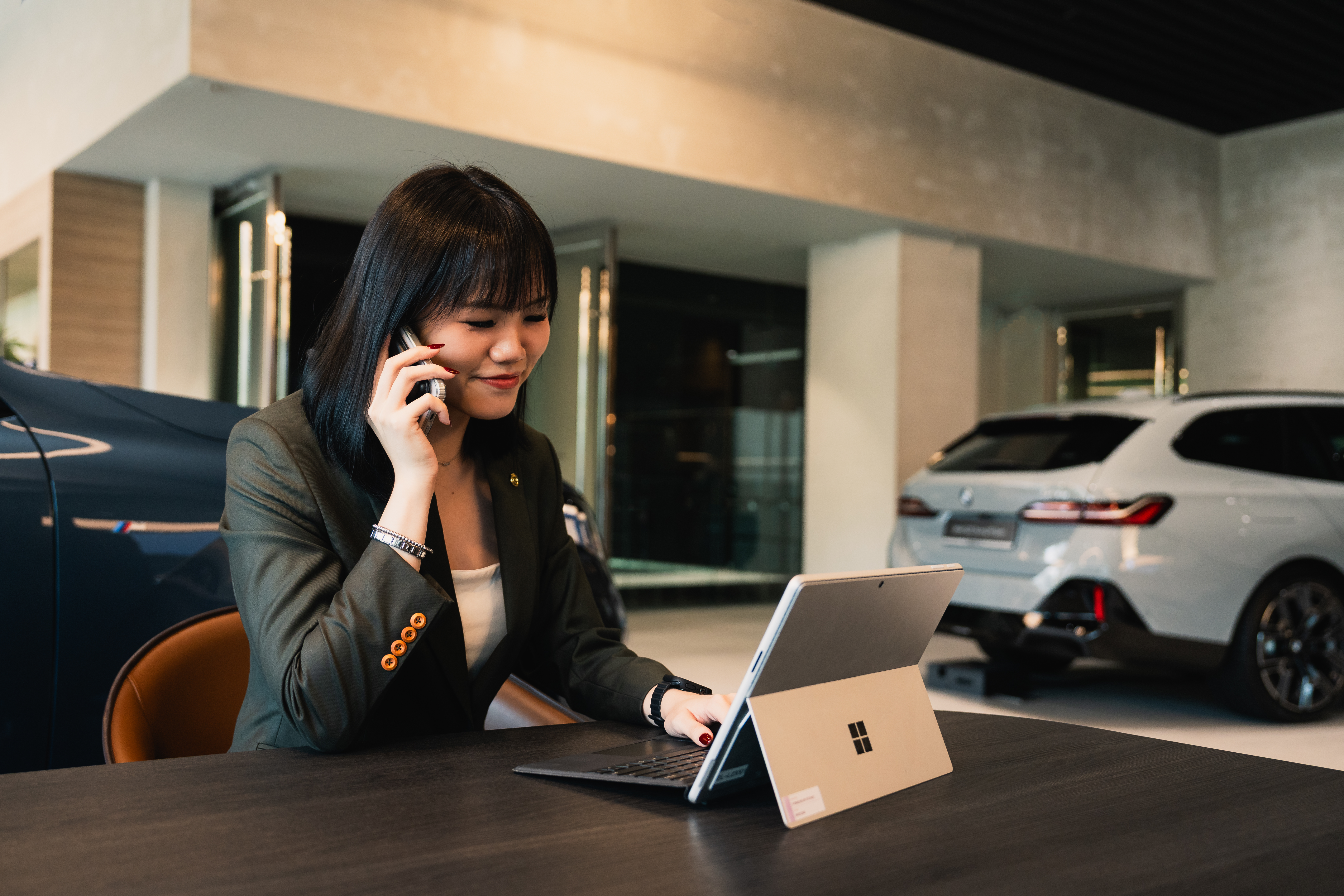 Transport should support the working day rather than become another task to manage. For some itineraries, having the same vehicle throughout the visit creates greater continuity and control.
Why a Dedicated Vehicle Changes the Way You Travel
A dedicated vehicle is not essential for every business trip in Singapore. It becomes valuable when timing, privacy, group coordination, or destination access matters more than the lowest possible transport cost.
More Control Over Multi-Stop Schedules
On-demand transport introduces uncertainty around driver availability, pick-up locations, and surge pricing. A rental car allows you to leave when the meeting ends, change the order of appointments, and add an unscheduled stop without arranging another booking.
This flexibility can be particularly useful when meetings are divided between the CBD and outlying districts. A short-term car rental also gives visiting professionals access to a vehicle only for the part of the trip that requires it, rather than for every day of the stay.
Privacy Between Appointments
A private car offers a quieter place to review notes, discuss the next meeting with colleagues, or make routine calls. Sensitive conversations should still be handled carefully, especially when a chauffeur or other passengers are present, but the environment may be more suitable than a crowded train or shared ride.
For a business trip in Singapore involving confidential documents or equipment, keep materials secured and avoid leaving laptops, prototypes, or files visible in a parked vehicle.
Consistency for Teams and Client Hosting
Travelling together can help a project team stay aligned between meetings, removing the risk of colleagues arriving at different times. For client hospitality, using one well-kept vehicle can make airport transfers, site visits, and business meals easier to coordinate.
The vehicle should suit the occasion without becoming unnecessarily extravagant. Comfort, cleanliness, rear-seat space, and easy entry can matter more than choosing the largest or most expensive model.
Choosing the Right Vehicle for Your Business Needs
For a business trip in Singapore, vehicle selection should begin with the itinerary. Consider who will drive, how many people will travel together, the amount of luggage or equipment, and the expected mileage.
Executive Sedans for City-Focused Itineraries
A saloon can suit one or two executives moving mainly between hotels, offices, and restaurants. It offers a balance of passenger comfort, boot space, and manageable dimensions for multi-storey car parks.
Visitors comparing vehicle rental in Singapore should check the actual model dimensions and luggage capacity, especially when airport transfers are part of the plan. A car that is comfortable for meetings may still be unsuitable for several large suitcases.
Premium Models for Senior Guests
A premium model may be appropriate when transporting senior leaders, hosting important clients, or attending formal events. For instance, travellers looking to rent a Mercedes can prioritise rear-seat comfort and a composed ride, while those planning to rent a Porsche in Singapore may prefer a model that combines executive presence with practical SUV space. Eurokars Leasing’s fleet also includes the BMW i7 and BMW 7 Series for executives who prefer a full-size luxury saloon.
Model availability changes, so confirm the vehicle shown during booking rather than relying on a general brand category. Eurokars Leasing’s short-term platform states that customers can select a specific model, with an upgrade offered if that model cannot be provided.
MPVs and Larger Vehicles for Team Travel
An MPV or larger SUV can work better for project teams, airport transfers, and site visits. Keeping colleagues in one vehicle reduces coordination problems and creates space for luggage, samples, or presentation materials.
Check the usable luggage area with every seat occupied. A seven-seat layout does not always leave enough boot space for seven travellers’ bags, so the passenger and storage requirements should be considered together.
Electric Vehicles for Suitable Itineraries
An EV car rental may suit an urban business trip in Singapore, particularly when the hotel or office provides convenient charging. Electric vehicles offer smooth, quiet travel and may align with a company’s sustainability policies.
Charging should fit around the itinerary rather than dictate it. Identify where the car will remain parked for long enough to charge and check connector availability before committing to an electric model. A petrol vehicle may be simpler for a heavily scheduled day with long mileage and no reliable charging stop.
What to Look for in a Corporate Car Rental Partner
The provider chosen for a business trip in Singapore matters as much as the vehicle. A suitable partner should make booking, collection, payment, support, and return procedures clear before the traveller arrives.
Clear Booking and Vehicle Information
Look for transparent rental durations, protection choices, deposits, driver requirements, mileage conditions, and charges for late returns or additional services. The booking confirmation should identify what has been reserved and explain the collection process.
For corporate car rental in Singapore, invoices and booking records should also be easy to retrieve for internal reporting. Digital booking can reduce paperwork, but the traveller should still review the rental agreement and understand the applicable charges.
Delivery and Collection Arrangements
Delivery to a hotel, office, or another agreed location can reduce the time spent visiting the rental lounge. Eurokars Leasing lists paid delivery and collection services, subject to timing and availability. Confirm the location, handover time, identification requirements, and return procedure in advance.
This service can be useful when a business trip in Singapore begins with meetings soon after arrival. It should still be booked with enough notice, as last-minute or after-hours arrangements may involve additional charges.
Support During the Rental
Ask who to contact for a breakdown, accident, warning light, damaged tyre, or booking change. Keep the support number in your phone and review the accident-reporting procedure before driving away.
Here at Eurokars Leasing, we provide a dedicated roadside assistance contact for various rental issues. For longer corporate leasing arrangements, our packages also include insurance, servicing and maintenance, road tax, and an account manager.
Cross-Border Requirements
A business trip in Singapore may include meetings in Johor or elsewhere in Malaysia. Do not assume every rental can cross the border automatically. Confirm permission, surcharges, insurance coverage, VEP status, required documents, and roadside support before booking.
Eurokars Leasing states that customers can add cross-border access and that most of its rental cars are VEP-ready, with supporting documents issued before collection. Fees and vehicle eligibility vary, so the final booking terms remain the point of reference.
Frequently Asked Questions About a Business Trip in Singapore
Can I drive in Singapore using a foreign licence?
Foreigners residing in Singapore for less than 12 months generally need a valid foreign driving licence together with an International Driving Permit. Where an IDP is unavailable, an official English translation is required. Drivers from ASEAN member states do not need an IDP if they hold a valid foreign licence. Rental providers may impose additional age, licence-tenure, and documentation requirements.
Should I rent a car for the entire trip?
Not necessarily. Even during a business trip in Singapore, there may be days when the MRT, walking, or ride-hailing is more convenient. Consider renting only for the days with airport transfers, cross-island meetings, client hosting, or site visits. Daily, weekly, and monthly rental periods allow the booking to reflect the itinerary more closely.
Is parking difficult in the CBD?
During a business trip in Singapore, parking is widely available but can be costly, and the entrance to a building’s car park may not be obvious. Check the car park address before leaving and allow time to find the correct lobby after parking. Some meetings may be easier to reach by parking once and walking between nearby buildings.
Can a rental car be used for travel to Malaysia?
If a business trip in Singapore includes meetings in Malaysia, cross-border use may be possible when approved by the provider. You will need the correct permission, insurance, vehicle documentation, and VEP arrangements. Add any cross-border service during booking and verify the conditions before departure.
What type of car is best for an executive travel itinerary in Singapore?
For executive travel in Singapore, a saloon suits many solo or two-person schedules, while an MPV may be better for teams and luggage. Premium vehicles can support senior guest transport, and electric cars may suit itineraries with convenient charging. The daily route and passenger requirements should guide the decision.
Plan a More Efficient Business Trip in Singapore
A smooth business trip in Singapore connects meetings, meals, transfers, and working time without placing unnecessary pressure on the traveller. Mapping each location, allowing realistic buffers, and choosing transport according to the day’s schedule can make the visit easier to manage.
Eurokars Leasing provides short-term rentals, long-term leasing, and corporate mobility solutions for individuals and businesses. Visiting executives can choose from daily, weekly, or monthly rentals across a range of models, while corporate clients can discuss longer-term fleet and leasing requirements.
Please contact us to arrange a vehicle that fits your business travel itinerary in Singapore.